
Building My Own AI Creative Workflow — Self-Hosting ComfyUI with the FluxDev Model and Authelia

As someone who enjoys both creative exploration and technical autonomy, I often find myself wanting more control than what commercial AI platforms offer. Many of these tools are powerful, but they also come with cloud dependencies, content restrictions, and limited transparency.
So I decided to build something of my own — a self-hosted AI environment where I could generate images using powerful models like FluxDev, control my data, and manage access securely.
Here’s how I set it up using ComfyUI, the FluxDev model, and Authelia.
Why Go Self-Hosted?
There were a few key reasons:
- I wanted a space to experiment creatively with image generation, especially anime and stylized content.
- I value privacy and speed — everything runs locally, with no external API calls or uploads.
- I like knowing what’s under the hood and being able to tweak everything: from model weights to system monitoring.
The Core Stack
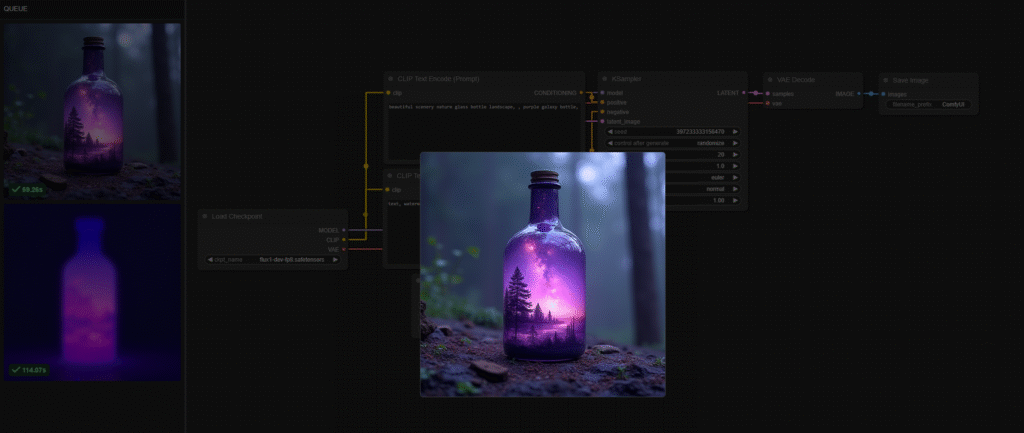
🧠 ComfyUI: The Engine
ComfyUI is a modular, node-based interface for Stable Diffusion workflows. It’s visually driven and incredibly flexible. I use it to build and iterate image pipelines with:
- Conditioning nodes
- Custom samplers
- Inpainting, upscaling, style mixing
🎨 FluxDev: The Model
FluxDev is a powerful model trained for stylized and anime-influenced outputs. It’s great for highly creative, visually striking generations.

In my setup, I’ve paired it with:
- Custom VAEs
- LORA add-ons
- High-res pipelines
This allows me to fine-tune both the output and the creative direction.
🔐 Authelia + Nginx: Locking It Down
Security matters, especially when you’re exposing services to the web. I use Authelia for Single Sign-On authentication, paired with an Nginx reverse proxy.
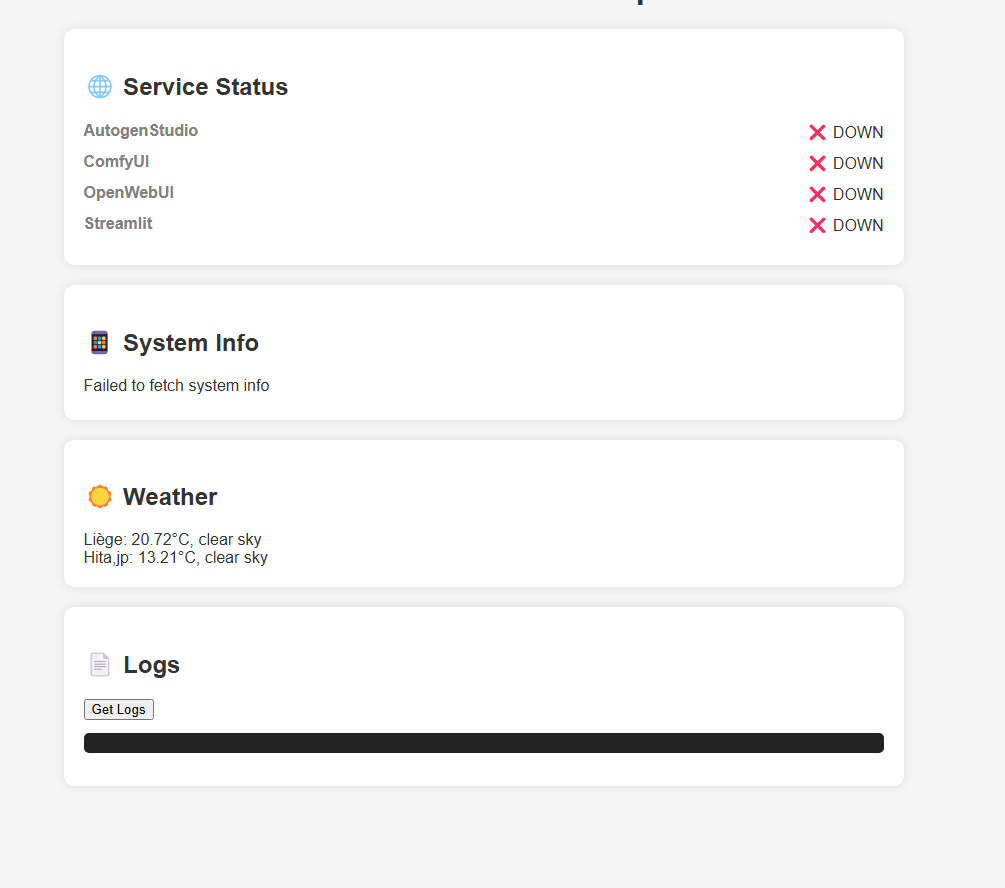
After logging in, I land on a custom dashboard at millenialtips.com/index.html, which includes:
- System resource monitoring (CPU, memory, uptime)
- Live tail logs of services
- Secure links to ComfyUI and other local tools
What I’ve Learned
- Hosting your own AI stack is easier than it seems, but it teaches you a lot about Linux, Docker, Python, and GPUs.
- Models like FluxDev shine when you can iterate without limits — especially when paired with a tool like ComfyUI.
- Having your own control panel with live system stats adds a nice DevOps touch and helps you keep things running smoothly.
Final Thoughts
I built this setup to support curiosity — to explore what’s possible when you’re not limited by the boundaries of hosted services. It’s not about breaking rules or bypassing safeguards. It’s about learning, tinkering, and building something that’s fully yours.
If you’re thinking about doing something similar, or just curious about the process, feel free to get in touch.
2 thoughts on “Building My Own AI Creative Workflow — Self-Hosting ComfyUI with the FluxDev Model and Authelia”